The perceived notion about growing corruption and the policy uncertainties have increased the country-specific credit quality risks for the companies in India, global rating agency S&P has warned.

Even as Srini Pallia, a Wipro veteran, is set to take charge as the chief executive officer (CEO) of the company, analysts expect the stock's underperformance to continue in the near-future. This, they believe, will be on the back of likely loss of market share, and difficult business environment. "We expect Wipro to underperform peers on growth once again in FY25 as channel checks and media reports suggest Wipro is losing share with select clients across multiple verticals.

Should deposit growth continue to outpace credit growth, banks may end up ceding some hard-earned 25-50 bps improvement in profitability or net interest margin gained in the past two years.

In the wake of the sharp downturn in the valuations of mortgage-backed securities last year, financial firms justified their investment in these non-transparent instruments on the triple ratings accorded to them.

Tata Motors is likely to exit the S&P BSE Sensex and the Nifty50 indices once the demerger process of its commercial vehicle (CV) and passenger vehicle (PV) businesses is complete, analysts at Nuvama Institutional Equities said. They have compared the development with Reliance Industries (RIL) and Jio Financial Services, which got listed separately and eventually (in the next few days) got excluded from the domestic indices.

Major laggards among Sensex constituents included Bharti Airtel, Hindustan Unilever, Tata Steel and ITC. Power Grid, UltraTech Cement, NTPC and Titan emerged as winners.

Fitch Ratings director Thomas Rookmaaker said India's debt-to-GDP ratio is likely to rise to 76 per cent from 70 per cent currently due to wider fiscal deficit and low economic growth.

The S&P BSE Sensex shed 286 points to close at 24,539 and the Nifty50 lost 100 points to end at 7,456.

Boom, bust or a bit of both: as the jury bides time before ruling on the US 'recession', the economy's vital signs at a perplexing time of high-interest rates, still-punishing inflation, and surprisingly strong economic gains are a study of a growing debate over whether the world's largest economy is barrelling into a new downturn. With the US Federal Reserve's (Fed's) inflation fighters attempting the risky pursuit of 'pillow-soft landings' and its economy sending out mixed signals, if there is indeed a recession, it could spell trouble for domestic equities and corporate earnings growth.

'While we note the very strong cyclical recovery in the economy, we believe there is still uncertainty over medium-term prospects.'
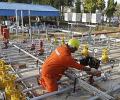
It is rare for Cabinet ministers to tick off state-owned companies publicly, yet that was what then petroleum and natural gas minister Dharmendra Pradhan did for ONGC. Speaking at an event on June 29, Pradhan said he has asked India's premier exploration company to find fresh oil acreages fast. "Do it yourself through some joint venture (or) through a new business model. But the government cannot permit you to hold resources for an indefinite time." The reason for this stricture is India's rising dependence on imported oil and gas. Or, to put it another way, falling domestic production (see chart: "Crude truth"), especially from ONGC, which faces a simple problem.

After a stellar run in 2021 that saw the S&P BSE Sensex and the Nifty50 clock gains of 20 per cent and 22 per cent respectively, global equity markets, including India, are gearing up to welcome 2022 on a cautious note. For one, new variants of the Covid -19 infection that make current vaccines less effective is one of the key risks worth flagging, analysts said. Inflation was also a risk for this asset class in 2021, although most market participants expect that the current elevated inflation levels will be transitory.

The mid-and small-cap segments at the bourses have outperformed their larger peers thus far in fiscal 2023-24 (FY24). While the S&P BSE Small-cap index has surged around 5.7 per cent in FY24, the S&P BSE Midcap index has gained 4 per cent during this period. In comparison, the S&P BSE Sensex has moved up around 2.2 per cent.

Global rating agency Standard & Poor's on Thursday warned Asia may see lower growth this year due to adverse impact of oil price pressure and tsunami, but said India will be an 'exception.'

The Reserve Bank of India on Friday raised the GDP growth projection for the current fiscal to 7 per cent from 6.5 per cent earlier on buoyant domestic demand and higher capacity utilisation in the manufacturing sector. Announcing the bi-monthly monetary policy, RBI Governor Shaktikanta Das, however, flagged protracted geopolitical turmoil and global economic fragmentation as risks to the growth outlook. The RBI kept interest rates unchanged at 6.5 per cent in Friday's monetary policy statement.
BSE Auto index fell over 0.5% after reports that automobiles might get costlier post GST

The 55 basis point (bps) spike in the US 10-year bond yield, triggered by a combination of FOMC's hawkish commentary and BOJ's relaxation of the yield control curve (YCC) has made analysts cautious on Asian equities and expect them to trade sideways in the short-to-medium term.

'We expect market consolidation and recommend buying during market dips.'

Sectorally, metal and banking stocks rallied the most, while FMCG and realty stocks came under selling pressure.
While retaining India's sovereign rating at 'BBB-' with a negative outlook, S&P said there is at least a one-in-three likelihood of a downgrade within the next 12 months.

Indian frontline benchmarks - the S&P BSE Sensex and the Nifty50 - have rallied around 12 per cent each since June-end and outperformed their global peers by a wide margin. On Thursday, the US Fed hiked interest rates by another 75 basis points (bps) - the third such hike this year - and surprised the markets by projecting further sizable hikes in the coming months. With the latest hike, the Fed fund rate (FFR) now stands in the range of 3 - 3.25 per cent and is highest since January 2008.
Global rating agency Standard & Poor's on Tuesday said tight monetary policy to tame rising inflation will slow down India's growth a bit to 7.5-8 per cent in 2008 and expressed concern about the worsening fiscal situation.
Nifty PSU Bank index gained 1% led by Allahabad Bank, Andhra Bank, Syndicate Bank and IDBI Bank
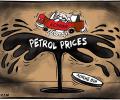
Petrol and diesel prices on Thursday climbed to fresh highs in the country as rates were hiked by the most in recent times, even as fuel retailers said the government can cut taxes to ease consumer burden. Petrol and diesel price was hiked by 35 paise per litre each after a gap of a week, according to price notification of state-owned fuel retailers. The increase took petrol prices to a fresh high of Rs 86.65 a litre in Delhi and to Rs 93.20 in Mumbai.
Banks led the decline with Nifty Bank and BSE Bank index dropping over 3% each.
India's top 10 banks, including the SBI, ICICI Bank and HDFC Bank suffered a collateral damage following the Standard and Poor's lowering the country's sovereign rating outlook.

These 10 stocks represent the best mix of value and growth, offering relatively low price-to-earnings and price-to-book ratios, a high return on equity, and sufficiently high potential from current levels.

The value of foreign portfolio investors' (FPI) holdings in the domestic equities reached $584 billion at the end of December 2022, which was 11 per cent lower from preceding year, according to a Morningstar report. This was largely on low return given by the Indian equities and exodus of foreign money from the domestic stock market. Going by the report, the value of FPIs investments in Indian equities dropped to $584 billion as of December 2022 as compared to $654 billion at the end of December 2021.
Standard & Poor's, which has threatened to downgrade the country's sovereign rating to junk, sees economic growth improving.
Standard & Poor's, which has threatened to downgrade the country's sovereign rating to junk, sees economic growth improving.
Amid rupee sliding below 64 to a dollar, global agency Standard & Poor's on Tuesday said it will maintain negative outlook for the country as currency depreciation is adversely impacting investor confidence.

The official said the finance ministry will impress upon rating agencies the resolve of the government to contain fiscal deficit at 4.1 per cent this year and lower it to 3 per cent by 2016-17.

There is a "one in three" chance of a downgrade of the country's sovereign rating to junk status in the next two years.

Global ratings agency Standard & Poor's on Thursday pegged India's FY'14 GDP growth at 6.4 per cent, one of the most optimistic estimates among analysts, and said it may upwardly revise outlook on the sovereign rating if the government continues to focus on policy initiatives.

M&M was the biggest loser in the Sensex chart, falling 6.39 per cent, followed by Tech Mahindra, Nestle India, Bajaj Finance, Axis Bank, ITC, JSW Steel, HDFC Bank and RIL. On the other hand, Sun Pharma, Tata Motors, Bharti Airtel, L&T and Infosys were among the winners, rising up to 2.10 per cent.

The global rating agencies S&P and Moody's have downgraded the credit ratings for several government-related entities in Dubai on fears about the government's failure to provide timely financial support to them.

Textile stocks have exhibited a mixed performance so far this calendar year (CY23), amidst higher domestic cotton prices and tepid global demand. Shares of Page Industries, Dollar Industries, Lux Industries, and VIP Clothing have declined up to 13 per cent so far in CY23, as against a 9 per cent jump in the S&P BSE Sensex. On the contrary, shares of Arvind, Welspun India, Raymond, and Gokaldas Exports have gained up to 51 per cent, during the same period.

The S&P BSE Realty Index has emerged as one of the top-performing sectors, yielding a remarkable 45 per cent return over the past six months. The three leading players, listed by market capitalisation, have substantially enriched investor wealth by 43-70 per cent during this period. If the second quarter (Q2) of 2023-24 (FY24) updates from Macrotech Developers (Lodha) and Sobha, along with industry data for the quarter, serve as any indication, the trend of strong bookings for larger players is expected to continue.
The corporate credit rating with a positive outlook, BBB, is higher than India's rating and "highlights the financial robustness of our business model and operating strengths of the company," TCS informed the Bombay Stock Exchange. According to S&P, the company has strong liquidity, with cash and bank deposits of Rs 1,230 crore (Rs 12.3 billion), about 9.4 per cent of total assets as on March 31, 2007.
